Guides · September 15, 2026 · 5 min read
What is a certificate of diversion, and does your business need one?
A plain-language guide to diversion certificates: what they show, who asks for them, and how to use one.
If your company has sustainability goals, or a customer has ever sent you a supplier questionnaire about waste, you’ve probably wondered how to prove where your waste actually goes. That’s what a certificate of diversion is for.
The short version
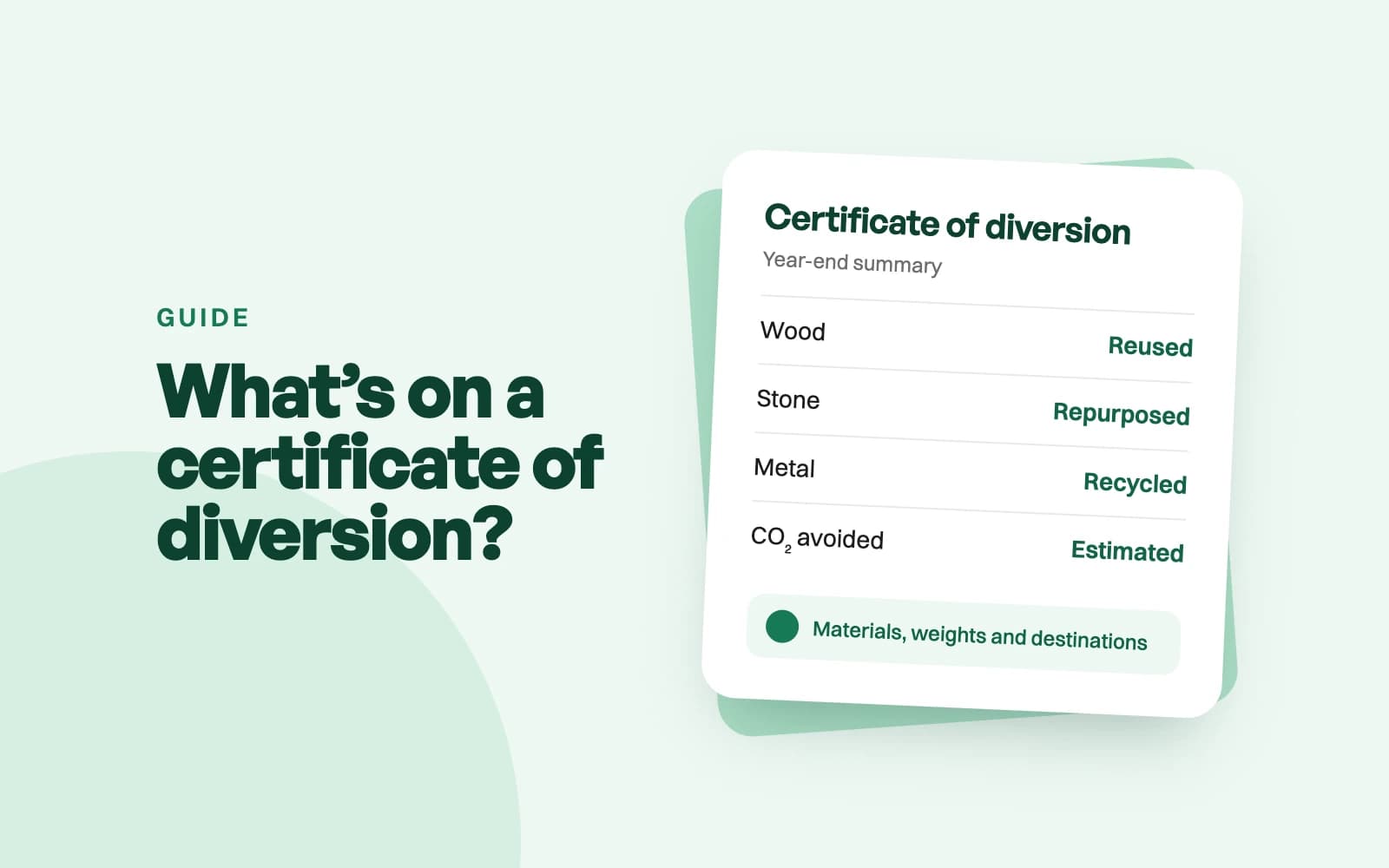
A certificate of diversion is a record of material that was kept out of landfill. It shows what was collected from your site, how much it weighed, and where it ended up.
What a good certificate shows
- The period it covers, usually a full year.
- Materials by category, such as wood, metal, stone, furniture and packaging.
- Weights for each category.
- Destinations: whether each material was reused, repurposed or recycled.
- Estimated CO₂ avoided, clearly labelled as an estimate.
Who asks for one
- Your board or leadership, as part of annual reporting.
- Customers and procurement teams, through supplier questionnaires and bids.
- Your own sustainability team, to track progress against targets.
Why “estimated” matters
CO₂ figures for waste are calculated from material type and weight, not measured at a smokestack. A trustworthy certificate says so. We always label CO₂ figures as estimates, and we’re happy to explain the method.
Do you need one?
If any of these sound familiar, probably yes:
- You report on sustainability or ESG, even informally.
- You’ve been asked where your waste goes.
- You have recurring waste streams like crates, pallets or packaging.
- You want credit for doing the right thing.
JunkCycle business clients get an estimated CO₂ impact record for every pickup, and a certificate of diversion at year-end. Get a quote to set one up.